Возрастные изменения в синапсах
Возрастные изменения характеризуются нарушением когнитивных функций и являются одним из основных факторов риска в развитии НДЗ-заболеваний. Большинство исследователей долгое время предполагало, что старение ассоциировано с уменьшением плотности синапсов в мозге.
С использованием антител к синапто- физину было показано, что в процессе нормального старения наблюдается устойчивое снижение концентрации синапсов коры головного мозга, начинающееся по крайней мере в возрасте около двадцати лет (Terry, Katzman, 2001) (рис. 2).К удивлению, последние данные, полученные на животных, не подтверждают предположения о том, что старение сопровождается потерей синапсов. В недавних экспериментах на мышах было показано, что потери синапсов с возрастом не происходит. Напротив, скорость образования и элиминации синапсов, т.е. обмен синапсов, с возрастом увеличивается в 10-20 раз по сравнению с молодым мозгом (Grillo et al., 2013) (рис. 3).
Эти наблюдения показывают, что обучение и нарушения памяти у мышей с возрастом могут возникать не через неспособность сформировать новые синапсы, а за счет снижения синаптической прочности.
Синаптические нарушения, вызываемые как с мутациями, так и со стрессовыми условиями, представляют собой первичный дефект для широкого спектра невроло-
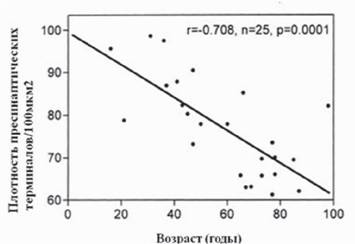
Рис. 2. Плотность синапсов при нормальном старении (Terry, Katzman, 2001)
Плотность пресинаптических терминалов определена методом конфокальной микроскопии на срезах мозга, окрашенных антителами к синаптофизину
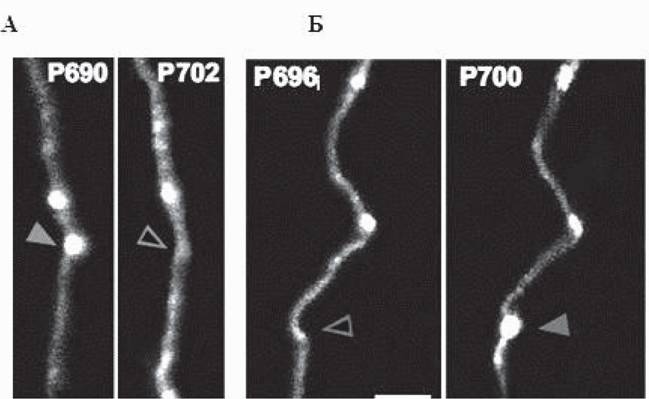
Рис. 3. Изменения в синапсах мышей при старении. Динамика изменения синаптических бутонов в коре головного мозга мышей при старении (Grillo et al., 2013)
А - элиминация бутона. Б - образование бутона.
Незакрашенная стрелка указывает место, где находился синаптическмй бутон, закрашенная стрелка - присутствие бутона. Масштаб - 5 мкмгических заболеваний человека. Обнаружение дисфункции, или потери синапсов позволяет не только проводить раннюю диагностику в период отсутствия клинических симптомов, но и разработать превентивные методы синаптотерапии. Представляется, что исследование моделей НДЗ человека сможет помочь в открытии ключевых клеточных процессов, которые регулируют дисфункцию и дегенерацию синапсов. Понимание этих процессов станет основой для разработки терапии НДЗ.
Литература
Гусев Н.Б. Нейродегенеративные болезни и проблема правильного сворачивания белка // Соросовский образовательный журнал. 2004. T. 8. № 2. C. 1-23.
Иллариошкин С.Н. Конформационные болезни мозга. М.: Янус-К, 2003. 246 с.
Andre V.M., Cepeda C., Levine M.S. Dopamine and glutamate in Huntington’s disease: A balancing act // CNS Neurosci. Ther. 2010. Vol. 16. P. 163-178.
Aronin, N., Chase, K., Young, C. et al. CAG expansion affects the expression of mutant huntingtin in the Huntington’s disease brain // Neuron. 1995. Vol. 15. P 1193-1201.
BabaM., Nakajo S., Tu P.H. et al. Aggregation of a-synuclein in Lewy bodies of sporadic Parkinson's disease and dementia with Lewy bodies // Am. J. Pathol. 1998. Vol. 152. P 879-884.
Bagetta V., Ghiglieri V., Sgobio C. et al. Synaptic dysfunction in Parkinson’s disease // Biochem. Soc. Trans. 2010. Vol. 38. P 493-497.
Balice-Gordon R.J., Smith D.B., Goldman J. et al. Functional motor unit failure precedes neuromuscular degeneration in canine motor neuron disease // Ann. Neurol. 2000. Vol. 47. P 596-605.
Bate C., Gentleman S., Williams A. a-synuclein induced synapse damage is enhanced by amyloid-P1-42 // Mol. Neurodegener. 2010. Vol. 5. P. 55.
Becher M.W., Kotzuk J.A., Sharp A.H. et al. Intranuclear neuronal inclusions in Huntington’s disease and dentatorubral and Pallidoluysian atrophy: correlation between the density of inclusions and IT15 CAG triplet repeat length // Neurobiol.
Dis. 1998. Vol. 4. P. 387-397.Bellani S., Sousa V.L., Ronzitti G. et al. The regulation of synaptic function by alpha-synuclein // Commun.. Integr. Biol. 2010. Vol. 3. P 106-109.
Belluzzi E., Greggio E., Piccoli G. Presynaptic dysfunction in Parkinson’s disease: a focus on LRRK2 // Biochem. Soc. Trans. 2012. Vol. 40. P 1111-1116.
Bence N.F., SampatR.M., Kopito R.R. Impairment of the ubiquitinproteasome system by protein aggregation // Science. 2001. Vol. 292. P 1552-1555.
Berg D., Schweitzer K., Leitner P. et al. Type and frequency of mutations in the LRRK2 gene in familial and sporadic Parkinson’s disease // Brain. 2005. Vol. 128. P 3000-3011.
Bezprozvanny I., Mattson, M.P. Neuronal calcium mishandling and the pathogenesis of Alzheimer’s disease // Trends. Neurosci. 2008. Vol. 31. P 454-463.
Boillee S., Vande Velde C., ClevelandD.W. ALS: a disease of motor neurons and their nonneuronal neighbors // Neuron. 2006. Vol. 52. P 39-59.
Bonanomi D., Benfenati F., Valtorta F. Protein sorting in the synaptic vesicle life cycle // Progr. Neurobiol. 2006. V 80. P 177-217.
Braak E., Braak H., Mandelkow E.M. A sequence of cytoskeleton changes related to the formation of neurofibrillary tangles and neuropil threads // Acta. Neuropathol. (Berl). 1994. Vol. 87. P 554-567.
BudkaH. Neuropathology of prion diseases // Br. Med. Bull. 2003. Vol. 66. P 121-130.
Cataldo A.M., Peterhoff C.M, Troncoso J.C. et al. Endocytic pathway abnormalities precede amyloid beta deposition in sporadic Alzheimer’s disease and Down syndrome: differential effects of APOE genotype and presenilin mutations // Am. J. Pathol. 2000. Vol. 157. P 277-286.
Cha J.H. Transcriptional signatures in Huntington’s disease // Prog. Neurobiol. 2007. Vol. 83. P. 228-248.
Chapman P.F., White G.L., Jones M.W. et al. Impaired synaptic plasticity and learning in aged amyloid precursor protein transgenic mice // Nat. Neurosci. 1999. Vol. 2. P. 271-276.
Chartier-Harlin M.C., Kachergus J., Roumier C.
et al. Alpha-synuclein locus duplication as a cause of familial Parkinson’s disease // Lancet. 2004. Vol. 364. P. 1167-1169.Cepeda C., Cummings D.M., Andre V.M. et al. Genetic mouse models of Huntington’s disease:focus on electrophysiological mechanisms // ASN Neurol. 2010. Vol. 2. P. e00033.
Citri A., Malenka R.C. Synaptic plasticity: multiple forms, functions, and mechanisms // Neuropsychopharmacology. 2008. Vol. 33. P. 18-41.
Cleary J.P., Walsh D.M., Hofmeister J.J. et al. Natural oligomers of the amyloid-beta protein specifically disrupt cognitive function // Nat. Neurosci. 2005. Vol. 8. P. 79-84.
Coleman P.D., Yao P.J. Synaptic slaughter in Alzheimer’s disease // Neurobiol. Aging. 2003. Vol. 24. P 1023-1027.
Coleman P., Federoff H., Kurlan R. A focus on the synapse for neuroprotection in Alzheimer disease and other dementias // Neurology. 2004. Vol. 63. P. 1155-1162.
Cunningham C., Deacon R., Wells H. et al. Synaptic changes characterize early behavioural signs in the ME7 model of murine prion disease // Eur. J. Neurosci. 2003. Vol. 17. P. 2147-2155.
Cunningham C., Deacon R.M., Chan K. et al. Neuropathologically distinct prion strains give rise to similar temporal profiles of behavioral deficits // Neurobiol. Dis. 2005. Vol. 18. P. 258-269.
Davidsson P., Blennow K. Neurochemical dissection of synaptic pathology in Alzheimer’s disease // Int. Psychogeriatr. 1998. V. 10. P. 11-23.
Davies C.A., Mann D.M., SumpterP.Q., Yates P.O. A quantitative morphometric analysis of the neuronal and synaptic content of the frontal and temporal cortex in patients with Alzheimer’s disease // J. Neurol. Sci. 1987. Vol. 78. P 151-164.
Davis K.L., Samuels S.C. Dementia and delirium // Pharmacological Management of Neurological and Psychiatric Disorders. NY: McGraw-Hill, 1998. P. 267-316.
Dawson TM., Dawson V.L. Molecular pathways of neurodegeneration in Parkinson’s disease // Science. 2003. Vol. 302. P 819-822.
Dawson T.M., KoH.S., Dawson V.L. Genetic animal models of Parkinson’s disease // Neuron.
2010. Vol. 66. P. 646-661.DeKosky S.T., Scheff S.W. Synapse loss in frontal cortex biopsies in Alzheimer’s disease: correlation with cognitive severity // Ann. Neurol. 1990. Vol. 27. P. 457-464.
DeKosky S.T, Scheff S.W, Styren S.D. Structural correlates of cognition in dementia: quantification and assessment of synapse change // Neurodegeneration. 1996. Vol. 5. P. 417-421.
DiFiglia M., Sapp E., Chase K.O. et al. Aggregation of huntingtin in neuronal intranuclear inclusions and dystrophic neurites in brain // Science. 1997. Vol. 277. P. 1990-1993.
Diogenes M.J., Dias R.B., Rombo D.M.et al. Extracellular alpha-synuclein oligomers modulate synaptic transmission and impair LTP via NMDA-receptor activation // J. Neurosci. 2012. Vol. 32. P. 1175011762.
Dodart J.C., Bales K.R., Gannon K.S. et al. Immunization reverses memory deficits without reducing brain Abeta burden in Alzheimer’s disease model // Nat. Neurosci. 2002. Vol. 5. P. 452-457.
Dunah A.W., Jeong H., Griffin A. et al. Sp1 and TAFI1130 transcriptional activity disrupted in early Huntington’s disease // Science. 2002. Vol. 296. P. 2238-2243.
Dupuis L., Gonzalez de Aguilar J.L. et al. Muscle mitochondrial uncoupling dismantles neuromuscular junction and triggers distal degeneration of motor neurons // PLoS One. 2009. Vol. 4. P. e 5390.
Eisen A., Weber M. The motor cortex and amyotrophic lateral sclerosis // Muscle Nerve. 2001. Vol. 24. P. 564-573.
Elias M.F, Beiser A., Wolf PA. et al. The preclinical phase of Alzheimer disease: a 22-year prospective study of the Framingham Cohort // Arch. Neurol. 2000. Vol. 57. P. 808-813.
EnyaM., Morishima-KawashimaM., YoshimuraM. et al. Appearance of sodium dodecyl sulfate-stable amyloid beta-protein (Abeta) dimer in the cortex during aging // Am. J. Pathol. 1999. Vol. 154. P. 271-279.
Fischer L.R., Culver D.G., TennantP. et al. Amyotrophic lateral sclerosis is a distal axonopathy: evidence in mice and man // Exp. Neurol. 2004. Vol. 185. P. 232-240.
Fortin D.L., Nemani VM., Voglmaier S.M. et al. Neural activity controls the synaptic accumulation of alpha- synuclein // J. Neurosci. 2005. Vol. 25. P 10913-10921.
Frey D., Schneider C., Xu L. et al. Early and selective loss of neuromuscular synapse subtypes with low sprouting competence in motor neuron diseases // J. Neurosci. 2000. Vol. 20. P. 2534-2542.
Gillingwater T.H, Ribchester R.R. Compartmental neurodegeneration and synapticplasticity in the Wlds mutant mouse // J. Physiol. 2001. Vol. 534. P. 627-639.
Gilman C.P., Mattson M.P. Do apoptotic mechanisms regulate synaptic plasticity and growth-cone motility? // Neurol. Molecular. Med. 2002. Vol. 2. P 197-214.
Gong Y., ChangL., Viola K.L. et al. Alzheimer’s disease-affected brain: presence of oligomeric A beta ligands (ADDLs) suggests a molecular basis for reversible memory loss // Proc. Natl. Acad. Sci. USA. 2003. Vol. 100. P 10417-1042.
Grillo F.W., Song S., Teles-Grilo Ruivo L.M. et al. Increased axonal bouton dynamics in the aging mouse cortex // Proc. Natl. Acad. Sci. USA. 2013. Vol. 110. P E1514-23.
Guidetti P., Charles V., Chen E.Y. et al. Early degenerative changes in transgenic mice expressing mutant huntingtin involve dendritic abnormalities but no impairment of mitochondrial en early degenerative changes in transgenic mice ergy production // Exp. Neurol. 2001. Vol. 169. P. 340-350.
Guenther K., Deacon R.M., Perry VH., Rawlins J.N. Early behavioral changes in scrapie-affected mice and the influence of dapsone // Eur. J. Neurosci. 2001. Vol. 14. P. 401-409.
Hatanpaa K., Isaacs K.R, Shirao T. et al. Loss of proteins regulating synaptic plasticity in normal aging of the human brain and in Alzheimer disease // J. Neuropathol. Exp. Neurol. 1999. Vol. 58. P. 637-643.
Hedrich K., Djarmati A., Schafer N. et al. DJ-1 (PARK7) mutations are less frequent than Parkin (PARK2) mutations in early-onset Parkinson disease // Neurology. 2004. Vol. 62. P. 389-394.
Helton T.D., Otsuka T., Lee M.C. et al. Pruning and loss of excitatory synapses by the parkin ubiquitin ligase // Proc. Natl. Acad. Sci. USA. 2008. Vol. 105. P 19492-19497.
Hilton D.A., Ghani A.C., Conyers L. et al. Accumulation of prion protein in tonsil and appendix: review of tissue samples // BMJ. 2002. Vol. 325. P 633-634.
Huynh D.P., Zhang D.P., Scoles D.R. et al. The autosomal recessive juvenile Parkinson disease gene product, parkin, interacts with and ubiquitinates synaptotagmin XI // Hum. Mol. Genet. 2003. Vol. 12. P. 25872597.
Ikemoto A., Nakamura S., Akiguchi I., Hirano A. Differential expression between synaptic vesicle proteins and presynaptic plasma membrane proteins in the anterior horn of amyotrophic lateral sclerosis // Acta. Neuropathol. 2002. Vol. 103. P 179-187.
Ishikura N., Clever J.L., Bouzamondo-Bernstein E. et al. Notch-1 activation and dendritic atrophy in prion disease // Proc. Natl. Acad. Sci. USA. 2005. Vol. 102. P 886-891.
Jeffrey M., Halliday W.G., Bell J. et al. Synapse loss associated with abnormal PrP precedes neuronal degeneration in the scrapie-infected murine hippocampus // Neuropathol. Appl. Neurobiol. 2000. Vol. 26. P 41-54.
Johnston A.R., Black C., Fraser J., MacLeod N. Scrapie infection alters the membrane and synaptic properties of mouse hippocampal CA1 pyramidal neurons // J. Physiol. (Lond). 1997. Vol. 500. P 1-15.
Karlsborg M., Rosenbaum S., Wiegell M. et al. Corticospinal tract degeneration and possible pathogenesis in ALS evaluated by MR diffusion tensor imaging // Amyotroph. Lateral Scler. Other Motor Neuron. Disord. 2004. Vol. 5. P 136-140.
Kawas C.H., Corrada M.M., Brookmeyer R. et al. Visual memory predicts Alzheimer’s disease more than a decade before diagnosis // Neurology. 2003. Vol. 60. P 1089-1093.
Kitada T., Pisani A., Porter D.R. et al. Impaired dopamine release and synaptic plasticity in the striatum of PINK1-deficient mice // Proc. Natl. Acad. Sci. USA. 2007. Vol. 104. P 11441-11446.
Klein C., GrunewaldA., Hedrich K. Early-onset parkinsonism associated with PINK1 mutations: frequency, genotypes, and phenotypes // Neurology. 2006. Vol. 66. P 1129-1130.
Klyubin I., Walsh D.M., Lemere C.A. et al. Amyloid beta protein immunotherapy neutralizes Abeta oligomers that disrupt synaptic plasticity in vivo // Nat. Med. 2005. Vol. 11. P 556-561.
Kotilinek L.A., Bacskai B., Westerman M. et al. Reversible memory loss in a mousetransgenic model of Alzheimer’s disease // J. Neurosci. 2002. Vol. 22. P 6331-6335.
Kretzschmar H.A., Prusiner S.B., Stowring L.E., DeArmond S.J. Scrapie prion proteins are synthesized in neurons // Am. J. Pathol. 1986. Vol. 122. P 1-5.
Kruger R., Kuhn W., Muller T. et al. Ala30Pro mutation in the gene encoding alpha-synuclein in Parkinson’s disease // Nat. Genet. 1998. Vol. 18. P 106-108.
Kuhn A., Goldstein D.R, Hodges A. et al. Mutant huntingtin’s effects on striatal gene expression in mice recapitulate changes observed in human Huntington’s disease brain and do not differ with mutant huntingtin length or wild-type huntingtin dosage // Hum. Mol. Genet. 2007. Vol. 16. P 1845-1860.
Kullmann D.M., Lamsa K.P. Long-term synaptic plasticity in hippocampal interneurons // Nat. Rev. Neurosci. 2007. Vol. 8. P. 687-699.
Lambert M.P., Barlow, A.K., Chromy B.A. et al. Diffusible, nonfibrillar ligands derived from Abeta1-42 are potent central nervous system neurotoxins // Proc. Natl. Acad. Sci. USA. 1998. Vol. 95. P 6448-6453.
Landis D.M., Williams R.S., Masters C.L. Golgi and electronmicroscopic studies of spongiform encephalopathy // Neurology. 1981. Vol. 31. P. 538-549.
Landles C., Bates G.P. Huntingtin and the molecular pathogenesis of Huntington’s disease. Fourth in molecular medicine review series // EMBO Rep. 2004. Vol. 5. P 958-963.
Lawrence A.D., Hodges J.R., Rosser A.E.et al. Evidence for specific cognitive deficits in preclinical Huntington’s disease // Brain. 1998. Vol. 121. P 1329 -1341.
Lee S., Liu H.P., Lin W.Y. et al. LRRK2 kinase regulates synaptic morphology through distinct substrates at the presynaptic and postsynaptic compartments of the Drosophila neuromuscular junction // J. Neurosci. 2010. Vol. 30. P 16959-16969.
Legname G., Baskakov I.V., Nguyen H.O. et al. Synthetic mammalian prions // Science. 2004. Vol. 305. P 673-676.
Li H., Li S.H., Yu Z.X. et al. Huntingtin aggregateassociated axonal degeneration is an early pathological event in Huntington’s disease mice // J. Neurosci. 2001. Vol. 21. P 8473-8481.
Li H., Wyman T., Yu Z.X. Abnormal association of mutant huntingtin with synaptic vesicles inhibits glutamate release // Hum. Mol. Genet. 2003. Vol. 12. P 2021-2030.
Li J.Y., Plomann M., Brundin P. Huntington’s disease: a synaptopathy? // Trends. Mol. Med. 2003. Vol. 9. P 414-420.
Liu J-X., Brannstrom T., Andersen PM., Pedrosa-Domellof F. Distinct changes in synaptic protein composition at neuromuscular junctions of extraocular muscles versus limb muscles of ALS donors // PLoS One. 2013. Vol. 8. P e57473.
Liu L., Wong T.P., Pozza M.F. et al. Role of NMDA receptor subtypes in governing the direction of hippocampal synaptic plasticity // Science. 2004. Vol. 304. P. 1021-1024.
Lotharius J., Barg S., Wiekop P. et al. Effect of mutant alpha-synuclein on dopamine homeostasis in a new human mesencephalic cell line // J. Biol. Chem. 2002. Vol. 277. P. 38884-38894.
Mallucci G.R. Prion neurodegeneration: starts and stops at the synapse // Prion. 2009. Vol. 3. P. 195-201.
Mallucci G., Dickinson A., Linehan J. et al. Depleting neuronal PrP in prion infection prevents disease and reverses spongiosis // Science. 2003. Vol. 302. P. 871-874.
Mallucci G.R., White M.D., Farmer M. et al. Targeting cellular prion protein reverses early cognitive deficits and neurophysiological dysfunction in prion-infected mice // Neuron. 2007. Vol. 53. P. 325-335.
Maselli R.A., Wollman R.L., Leung C. et al. Neuromuscular transmission in amyotrophic lateral sclerosis // Muscle Nerve. 1993. Vol. 16. P. 1193-1203.
Masliah E., Mallory M., Alford M. et al. Altered expression of synaptic proteins occurs early during progression of Alzheimer’s disease // Neurology. 2001. Vol. 56. P. 127-129.
Masliah E., Terry R. The role of synaptic proteins in the pathogenesis of disorders of the central nervous system // Brain. Pathol. 1993. Vol. 3. P. 77-85.
Matta S., Van Kolen K., da Cunha R. et al. LRRK2 controls an EndoA phosphorylation cycle in synaptic endocytosis // Neuron. 2012. Vol. 75. P. 1008-1021.
Mattson M.P., Keller J.N., Begley J.G. Evidence for synaptic apoptosis // Exp. Neurol. 1998. Vol. 153.P. 35.
Mattson M.P. Apoptotic and anti-apoptotic synaptic signaling mechanisms // Brain. Pathol. 2000. Vol. 10. P. 300-312.
Milnerwood A.J., Raymond L.A. Early synaptic pathophysiology in neurodegeneration: insights from Huntington’s disease // Trends Neurosci. 2010. Vol. 33. P. 513-523.
Mizuno H., Shibayama H., Tanaka F.et al. An autopsy case with clinically and molecular genetically diagnosed Huntington’s disease with only minimal nonspecific neuropathological findings // Clin. Neuropathol. 2000. Vol. 19. P. 94-103.
Moser M., Colello R.J., Pott U., Oesch B. Developmental expression of the prion protein gene in glial cells // Neuron. 1995. Vol. 14. P. 509-517.
Mucke L., Masliah E., Yu G.Q. et al. High-level neuronal expression of abeta 1-42 in wild-type human amyloid protein precursor transgenic mice: synaptotoxicity without plaque formation // J. Neurosci. 2000. Vol. 20. P. 4050-4058.
Murthy VN., De Camilli P. Cell biology of the presynaptic terminal // Annu. Rev. Neurosci. 2003. Vol. 26. P. 701-728.
Nucifora F.C. Jr, Ellerby L.M., Wellington C.L. et al. Nuclear localization of a non-caspase truncation product of atrophin-1, with an expanded polyglutamine repeat, increases cellular toxicity // J. Biol. Chem. 2003. Vol. 278. P. 13047-13055.
Nuytemans K., Theuns J., Cruts M., Van Broeckhoven C. Genetic etiology of Parkinson disease associated with mutations in the SNCA, PARK2, PINK1, PARK7, and LRRK2 genes: a mutation update // Hum. Mutat. 2010. Vol. 31. P. 763-780.
O’Hare E., Weldon D.T., Mantyh P.W. et al. Delayed behavioral effects following intrahippocampal injection of aggregated A beta (1-42) // Brain Res. 1999. Vol. 815. P. 1-10.
Paisan-Rmz C., Jain S., Evans E.W. et al. Cloning of the gene containing mutations that cause PARK8-linked Parkinson’s disease // Neuron. 2004. Vol. 44. P. 595-600.
Palop J.J., Mucke L. Amyloid-beta-induced neuronal dysfunction in Alzheimer’s disease: from synapses toward neural networks // Nat. Neurosci. 2010. Vol. 13. P. 812-818.
Pasinelli P., Brown R.H. Molecular biology of amyotrophic lateral sclerosis: insights from genetics // Nat. Rev. Neurosci. 2006. Vol. 7. P. 710-723.
Paulsen J.S., Langbehn D.R., Stout J.C.etal. Detection of Huntington’s disease decades before diagnosis: the Predict-HD study // J. Neurol. Neurosurg. Psychiatry. 2008. Vol. 79. P. 874-880.
Piccoli G., Condliffe S.B., Bauer M. et al. LRRK2 controls synaptic vesicle storage and mobilization within the recycling pool // J. Neurosci. 2011. Vol. 31. P. 2225-2237.
Picconi B., Piccoli G., Calabresi P. Synaptic dysfunction in Parkinson’s disease // Adv. Exp. Med. Biol. 2012. Vol. 970. P. 553-72.
Plowey E.D., Chu C.T. Synaptic dysfunction in genetic models of Parkinson’s disease: a role for autophagy? // Neurobiol. Dis. 2011. Vol. 43. P. 60-67.
Polymeropoulos M.H., Lavedan C., Leroy E. et al. Mutation in the alpha-synuclein gene identified in families with Parkinson’s disease // Science. 1997. Vol. 276. P. 2045-2047.
Popugaeva Е., Supnet С., Bezprozvanny I. Presenilins, deranged calcium homeostasis, synaptic loss and dysfunction in Alzheimer’s disease // Messenger. 2007. Vol. 1. P. 53-62.
Prusiner S.B., McKinley M.P., Bowman K.A. Scrapie prions aggregate to form amyloid-like birefringent rods // Cell. 1983. Vol. 35. P. 349-358.
PrusinerSB. Prions // Proc. Natl. Acad. Sci. USA. 1998. Vol. 95. P. 13363-13383.
Puzzo D., Privitera L., Leznik E. et al. Picomolar Amyloid-{beta} Positively Modulates Synaptic Plasticity and Memory in Hippocampus // J. Neurosci. 2008. Vol. 28. P. 14537-14545.
Raymond L.A., Andre VM., Cepeda C. et al. Pathophysiology of Huntington’s disease: time-dependent alterations in synaptic and reeptor function // Neuroscience. 2011. Vol. 198. P. 252-273.
Recchia A., Debetto, P., Negro, A. et al. Alpha-Synuclein and Parkinson’s disease // FASEB J. 2004. Vol. 18. P. 617-626.
RowlandL.P., Shneider N.A. Medical progress: Amyotrophic lateral sclerosis // N. Engl. J. Med. 2001. Vol. 344. P. 1688-1700.
Saura C.A., Choi S.-Y., Beglopoulos V. et al. Loss of presenilin function causes impairments of memory and synaptic plasticity followed by age-dependent neurodegeneration // Neuron. 2004. Vol. 42. P. 23-36.
Savitt J.M., Dawson V.L., Dawson T.M. Diagnosis and treatment of Parkinson disease: molecules to medicine // J. Clin. Invest. 2006. Vol. 116. P. 1744-1754.
Scheff S.W., Price D.A., Schmitt F.A. et al. Synaptic alterations in CA1 in mild Alzheimer disease and mild cognitive impairment // Neurology. 2007. Vol. 68. P. 1501-1508.
ScottD.A., Tabarean I., Tang Y. et al. A pathologic cascade leading to synaptic dysfunction in alpha-synuclein- induced neurodegeneration // J. Neurosci. 2010. Vol. 30. P. 8083-8095.
Selkoe D. Alzheimer’s disease is a synaptic failure // Science. 2002. Vol. 298. P. 789-791.
Shankar G.M., Bloodgood B.L., TownsendM. et al. Natural oligomers of the Alzheimer amyloid-beta protein induce reversible synapse loss by modulating an NMDA-type glutamate receptor-dependent signaling pathway // J. Neurosci. 2007. Vol. 27. P. 2866-2875.
Shin N., Jeong H., Kwon J. et al. LRRK2 regulates synaptic vesicle endocytosis // Exp. Cell. Res. 2008. Vol. 314. P. 2055-2065.
Sidhu A., Wersinger C., Vernier P. Does alpha-synuclein modulate dopaminergic synaptic content and tone at the synapse? // FASEB J. 2004. Vol. 18. P. 637-647.
Singleton A.B., Farrer M., Johnson J. et al. Alpha-synuclein locus triplication causes Parkinson’s disease // Science. 2003. Vol. 302. P. 841.
Spillantini M.G., Schmidt M.L., Lee VM. et al. Alpha-synuclein in Lewy bodies // Nature. 1997. Vol. 388. P. 839-840.
Stahl N., Baldwin M.A., Teplow D.B. et al. Structural studies of the scrapie prion protein using mass spectrometry and amino acid sequencing // Biochemistry. 1993. Vol. 32. P. 1991-2002.
Taylor J.P., Mata I.F., Farrer M.J. LRRK2: a common pathway for parkinsonism, pathogenesis and prevention? // Trends Mol. Med. 2006. Vol. 12. P. 76-82.
Terry R.D., Katzman R. Life span and synapses: will there be a primary senile dementia? // Neurobiol. Aging. 2001. Vol. 22. P. 347-348.
Tiraboschi P., Hansen L.A., Alford M. et al. The decline in synapses and cholinergic activity is asynchronous in Alzheimer’s disease // Neurology. 2000. Vol. 55. P. 1278-1283.
Thomas B., BealM.F. Parkinson’s disease // Hum. Mol. Genet. 2007. Vol. 16. P. R183-R194.
Tong Y., Pisani A., Martella G. et al. R1441C mutation in LRRK2 impairs dopaminergic neurotransmission in mice // Proc. Natl. Acad. Sci. USA. 2009. Vol. 106. P. 14622-14627.
Townsend M., Shankar G.M., Mehta T. et al. Effects ofsecreted oligomers of amyloid beta-protein on hippocampal synaptic plasticity: a potent role for trimers // J. Physiol. 2006. Vol. 572. P. 477-492.
Trojanowski J.Q., Lee VM.Y. Aggregation of neurofilament and alpha-synuclein proteins in Lewy bodies: implications for the pathogenesis of Parkinson disease and Lewy body dementia // Arch. Neurol. 1998. Vol. 55. P. 151-152.
Trottier Y., Devys D., Imbert G. et al. Cellular localization of the Huntington’s disease protein and discrimination of the normal and mutated form // Nature Genet. 1995. Vol. 10. P. 104-110.
Tsai J., Grutzendler J., DuffK., Gan W.B. Fibrillar amyloid deposition leads to local synaptic abnormalities and breakage of neuronal branches // Nat. Neurosci. 2004. Vol. 7. P. 1181-1183.
Van Raamsdonk J.M., Pearson J., Slow E.J. et al. Cognitive dysfunction precedes neuropathology and motor abnormalities in the YAC128 mouse model of Huntington’s disease // J. Neurosci. 2005. Vol. 25. P. 4169-4180.
Venkitaramani D.V., Chin J., Netzer W.J. et al. Beta-amyloid modulation of synaptic transmission andplasticity // J. Neurosci. 2007. Vol. 27. P. 11832-11837.
Vonsattel J.P., Myers R.H., Stevens T.J. et al. Neuropathological classification of Huntington’s Disease // J. Neuropathol. Exp. Neurol. 1985. Vol. 44. P. 559-577.
Walsh D.M., Hartley D.M., Kusumoto Y. et al. Amyloid beta-protein fibrillogenesis. Structure and biological activity of protofibrillar intermediates // J. Biol. Chem. 1999. Vol. 274. P. 25945-25952.
Walsh D.M., Klyubin I., Fadeeva J.V et al. Naturally secreted oligomers of amyloid beta protein potently inhibit hippocampal long-term potentiation in vivo // Nature. 2002. Vol. 416. P. 535-539.
Wan O.W., Chung K.K.K. The Role of Alpha-Synuclein oligomerization and aggregation in cellular and animal models of Parkinson’s disease // PLoS One. 2012. Vol. 7. e38545.
Wang Y., Chandran J.S., CaiH., MattsonM.P. DJ-1 is essential for long-term depression at hippocampal CA1 synapses // Neuromolecular. Med. 2008. Vol. 10. P. 40-45.
Wishart TM., Parson S.H., Gillingwater T.H. Synaptic vulnerability in neurodegenerative disease // J. Neuropathol. Exp. Neurol. 2006. Vol. 65. P. 733-739.
Wood J.D., MacMillan J.C., Harper P.S. et al. Partial characterisation of murine huntingtin and apparent variations in the subcellular localisation of huntingtin in human, mouse and rat brain // Hum. Mol. Genet. 1996. Vol. 5. P. 481-487.
Yavich L., Tanila H., Vepsalainen S., Jakala P. Role of alpha-synuclein in presynaptic dopamine recruitment // J. Neurosci. 2004. Vol. 24. P. 11165-70.
Zarranz J.J., Alegre J., Gomez-Esteban J.C. et al. The new mutation, E46K, of alpha-synuclein causes Parkinson and Lewy body dementia // Ann. Neurol. 2004. Vol. 55. P. 164-173.
Zeron M.M., Hansson O., Chen N. Increased sensitivity to N-methyl-Daspartate receptor-mediated excitotoxicity in a mouse model of Huntington’s disease // Neuron. 2002. Vol. 33. P. 849-860.
Zhang Y., Gao J., Chung K.K. et al. Parkin functions as an E2-dependent ubiquitin- protein ligase and promotes the degradation of the synaptic vesicle-associated protein, CDCrel-1 // Proc. Natl. Acad. Sci. USA. 2000. Vol. 97. P. 13354-13359.
Zimprich A., Mu'ller-MyhsokB., Farrer M. et al. The PARK8 locus in autosomal dominant parkinsonism: confirmation of linkage and further delineation of the disease-containing interval // Am. J. Hum. Genet. 2004. Vol. 74. P. 11-19.
Еще по теме Возрастные изменения в синапсах:
- 3.1. Возрастные изменения рефракции
- 1.3 Возрастные изменения слизистой оболочки желудка
- 1.4. Возрастные изменения других клеточныхструктур и функций
- 1.3.3. Возрастное изменение морфоцитометрических показателей митохондрий
- Возрастные изменения ресничного пояска.
- Особенности возрастных изменений некоторых биохимических показателей крови
- 22. Возрастные изменения в наследуемости интеллекта и отдельных когнитивных процессов.
- Возрастная динамика изменений эндотелия визуально неизмененных сосудов
- Нарушения функций синапсов
- Синапсы между нейронами
- 13.Классификация синапсов .соврем представл.
- Нейротрансмиттеры синапсов.
- Конвульсанты, действующие на ГАМК-реактивные синапсы