Генетический анализ болезни Паркинсона как ключ к этиопатогенезу заболевания
Достигнутый за последние годы значительный прогресс в изучении генетических факторов, лежащих в основе как моногенных, так и спорадических форм БП, позволил значительно расширить наши представления об этиопатогенезе заболевания.
На рис. 1 схематически представлена роль девяти ключевых генов (см. табл. 1) в патогенезе БП (Trinh, Farrer, 2013). Так а-синуклеин способствует экзо- цитозу и может играть определенную роль в стабилизации образующихся эндосом в пресинаптических аксонах. LRRK2 регулирует фосфорилирование эндофилина А, который принимает участие в освобождении покрытых клатрином эндосомных везикул в постсинаптическом нейроне, а также в регуляции аутофагии, фосфорилировании MAPT и стабилизации микротрубочек. VPS35 является неотъемлемой частью комплекса, обеспечивающего распознавание трансмембранных рецепторов и их обратный транспорт от эндосом к аппарату Гольджи или к мембране. VPS35 обеспечивает везикулярный транспорт между митохондрией и пероксисосмой. GBA является лизосомальной гидролазой. Кроме того, GBA необходима для комплекса, обеспечивающего обратный транспорт. Паркин, PINK1 и DJ-1 вовлечены в митохондриальный биогенез и индукцию аутофагии. ATP13A2 принимает учас-Микро-РНК в развитии болезни Паркинсона
| Микро- РНК | Гены- мишени | Органы и ткани | Объект исследования | Функция |
| miR-133b | Pitx3 | ДА- нейроны среднего мозга | ЭСК, Mus musculus, мыши с афакией, лишенные Pitx3, мыши, с индуцированным 6-гидроксидофамином паркинсонизмом, МЧ | регуляция созревания и функционирования ДА-нейронов среднего мозга |
| miR-433 | FGF20 | кровь пациентов с БП, ДА- нейроны среднего мозга | МЧ, клеточные линии фибробластов, SH- SY5Y, пациенты с БП, здоровые добровольцы | подавление экспрессии FGF20 |
| miR-7 | SNCA | черная субстанция, стриатум, средний мозг, гиппокамп | HEK293T, SH-SY5Y, NS20Y нейробластомы мыши, мозг мыши, MPTP-модель на SH-SY5Y, HEK293 , кортикальные нейроны мыши и крысы, мозговые ткани мыши | регуляция экспрессии SNCA в нервной системе, защита от окислительного стресса и разрушения протеасом, индуцируемого SNCA, miR-7 |
| miR-153 | SNCA | средний мозг, гиппокамп | HEK293, кортикальные нейроны мыши и крысы, мозговые ткани мыши | регуляция экспрессии SNCA в нервной системе. miR- 153 синергист miR-7, при этом miR-153 инициирует разрушение мРНК SNCA |
| miR-1 | TPPP/p25 CLTC | лимфоциты крови | лимфоциты крови человека | экспериментально не подтверждена |
| miR-22* | TP53BP2 GRIA1 | лимфоциты крови | лимфоциты крови человека | экспериментально не подтверждена |
| miR-29a | SEPT4 | лимфоциты крови | лимфоциты крови человека | экспериментально не подтверждена |
| miR-16-2* | FGF20 | лимфоциты крови | лимфоциты крови человека | экспериментально не подтверждена |
| miR- 26a-2* | GRIA1 | лимфоциты крови | лимфоциты крови человека | экспериментально не подтверждена |
| miR-30a | SLC6A3 GRIA1 | лимфоциты крови | лимфоциты крови человека | экспериментально не подтверждена |
| miR-34b | не выявлены | ДА- нейроны | SH-SY5Y, МЧ | вероятно регулирует экспрессию PARK2 и PARK7 |
| miR-34c | не выявлены | ДА- нейроны | SH-SY5Y, МЧ | вероятно регулирует экспрессию PARK2 и PARK7 |
| miR-let-7 | pdr-1 E2F1 | нейроны | C. elegans, HEK293T, D. Melanogaster | влияние на экспрессию ортолога паркина pdr-1 влияние на патогенность мутантного LRRK2 через E2F1 и DP |
| miR-64 | mdl-1, ptc-1 | данных нет | C. elegans | экспериментально не подтверждено |
| miR-65 | mdl-1, ptc-1 | данных нет | C. elegans | экспериментально не подтверждено |
| miR-184* | DP | нейроны | HEK293T, D. Melanogaster | влияние на патогенность мутантного LRRK2 через E2F1 и DP |
ЭСК - эмбриональные стволовые клетки; МЧ - постмортальные ткани мозга человека; SH-SY5Y - культура клеток нейробластомы человека; HEK293T - человеческие эмбриональные клетки почек, трансфецированные Т-антигеном вируса SV-40; HEK293 - человеческие эмбриональные клетки почек.
тие в лизосомальной аутофагии. MAPT принимает участие в аксональном транспорте.
Таким образом, анализ всех возможных функций ключевых генов патогенеза БП, представленных в табл. 1 и рис. 1, позволяет предположить, что наряду с нарушением процессов нормального функционирования митохондрий и процессов протеолиза важную роль в патогенезе БП может играть нарушение процессов везикулярного синаптического транспорта и нормального функционирования синапса.
С другой стороны, анализ всех известных генетических вариантов в девяти ключевых генах БП позволяет разделить их на три основные группы, представленные на рис. 2 (Sharma et al., 2012). К первой группе относятся очень редкие варианты с очень высоким риском развития БП - фактически это мутации, приводящие к развитию семейных форм заболевания. Ко второй группе относятся мутации в гене GBA, которые встречаются намного чаще, чем мутации в генах семейных форм, но имеют более низкий риск развития БП.
В третью группу входят генетические варианты в трех генах SNCA, LRRK2, MAPT, которые имеют высокую аллельную частоту, но очень низкий риск развития заболевания.В заключение хотелось бы отметить, что, несмотря на очевидный прогресс, достигнутый в изучении молекулярно-генетических факторов и механизмов патогенеза БП, еще остается целый ряд нерешенных и очень важных вопросов, связанных развитием нейродегенеративных процессов при БП. Так, до сих пор остается неизвестным, где начинаются процессы нейродегенерации - в соме нейрона или на его периферии, а также - какие именно процессы запускают развитие патологии. Кроме того, все выявленные на сегодняшний день мутации в генах моногенных форм БП описывают не более 50% все известных семей с аутосомно-рецес- сивной формой БП и только около 20% семей с аутосомно-доминантной формой БП (Sharma et al., 2012).
Следовательно, выявлены далеко не все гены и описаны не все мутации, которые могут быть вовлечены в патогенез БП, и работы по их поиску необходимо продолжать. При этом необходимо использовать самые современные и высокопроизводительные технологии (полногеномный, полноэкзомный и полнотранс- криптомный анализ), а также проводить параллельное изучение различных моделей заболевания и всех доступных тканей (в первую очередь лейкоцитов) больных БП, находящихся на разных стадиях заболевания. И только такой комплексный по-
278
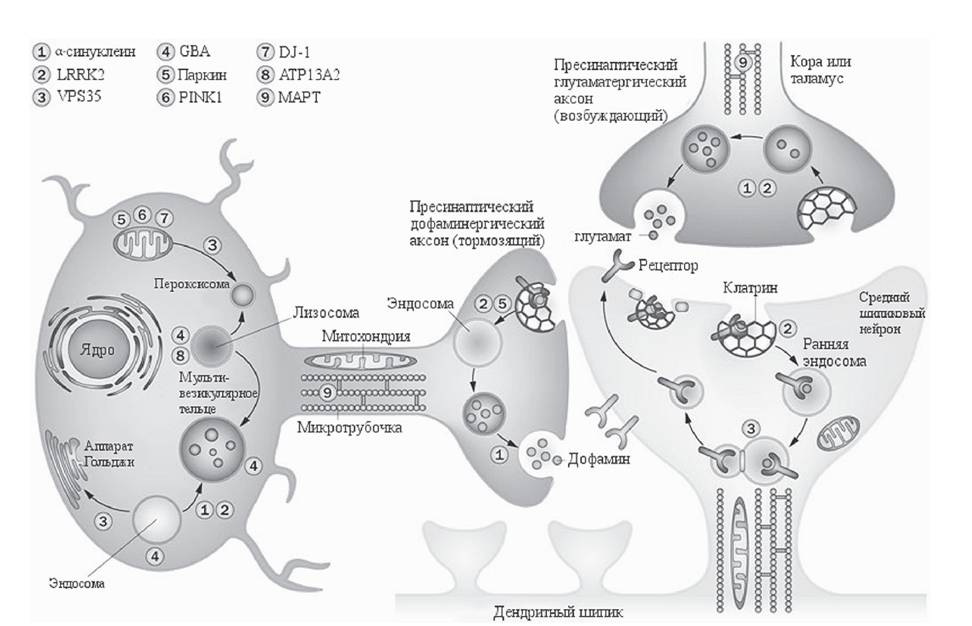
Рис. 1. Современные представления об этиопатогенезе болезни Паркинсона и возможная роль ключевых кандидатных генов заболевания в патологическом процессе
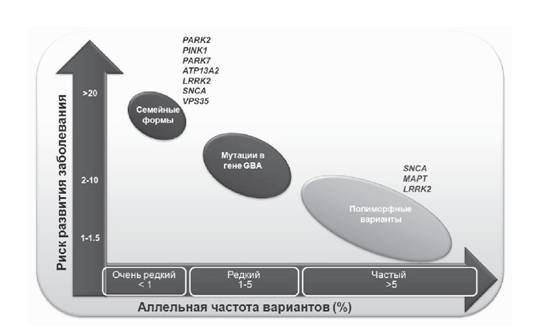
Рис. 2. Относительный риск развития болезни Паркинсона у носителей генетических факторов риска в зависимости от их аллельной частоты
ход позволит сформировать полную картину этиопатогенеза БП и ответить на все вопросы, поставленные выше.
Литература
Багыева Г.Х., Иллариошкин С.Н., Сломинский П.А.
и др. Сочетание мутаций в локусах PARK2 и PARK8 у пациентки с ранней формой болезни Паркинсона // Неврол. журнал. 2007. Т 2. С. 15-18.Иллариошкин С.Н., Сломинский П.А., Шадрина М.И. и др. Гетерогенность спорадической болезни Паркинсона: Молекулярный подход к решению проблемы // Анн. клин. эксперим. неврологии. 2007. Т 1. С. 23-31.
Семенова Е.В., Шадрина М.И., Сломинский П.А. и др. Анализ изменения дозы гена альфа-синуклеина при аутосомно-доминантной форме болезни Паркинсона // Генетика. 2009. Т 45. № 4. С. 573-576.
Филатова Е.В., Шадрина М.И., Федотова Е.Ю. и др. Анализ однонуклеотидного полиморфизма rs415430 в гене WNT3 в российской популяции при болезни Паркинсона // Молекулярная генетика, микробиология и вирусология. 2011. Т 2. C. 3-4.
Шадрина М.И., Сломинский П.А. Молекулярная генетика болезни Паркинсона // Генетика. 2006. № 8. Т 42. № 2. C. 1045-1059.
Шадрина М.И., Семенова Е.В., Сломинский П.А. и др. Метод определения делеций и дупликаций в гене паркина с использованием полимеразной цепной реакции в реальном времени // Мед. генетика. 2006. Т 5. № 2. C. 52-54.
Шадрина М.И., Иллариошкин С.Н., Багыева Г.Х. и др. PAR^-форма болезни Паркинсона: мутационный анализ гена LRRK2 в российской популяции // Журнал невропат, и псих. им. С.С. Корсакова. 2007. Т. 3. С. 46-50.
Allen A.S., Satten G.A. Novel haplotype-sharing approach for genome-wide case-control association studies implicates the calpastatin gene in Parkinson’s disease // Genetic Epidemiology. 2009. Vol. 33. P. 657667.
Asikainen S., Rudgalvyte M., Heikkinen L. et al. Global microRNA expression profiling of caenorhabditis elegans Parkinson’s disease models // J. Mol. neurosci. 2010. Vol. 41. № 1. P. 210-218.
Barbanti P., Fabbrini G., Ricci A. et al. Increased expression of dopamine receptors on lymphocytes in Parkinson’s disease // Mov. Disord. 1999. Vol. 14. P. 764-771.
Barbato C., Ruberti F., Cogoni C. Searching for MIND: MicroRNAs in Neurodegenerative Diseases // J. Biomed. Biotechnol.
2009. P. ID 871313.Beckstead R.B., Ner S.S., Hales K.G. et al. Bonus, a Drosophila TIF1 homolog, is a chromatin-associated protein that acts as a modifier of position-effect variegation // Genetics. 2005. Vol. 169. № 2. P. 783-94. Behm-Ansmant I., Rehwinkel J., Doerks T. et al. mRNA degradation by miRNAs and GW182 requires both CCR4:NOT deadenylase and DCP1:DCP2 decapping complexes // Genes. Dev. 2006. Vol. 20. № 14. P. 1885-1898.
Bellen H.J., Levis R.W., Liao G. et al. The BDGP gene disruption project: single transposon insertions associated with 40% of Drosophila genes // Genetics. 2004. Vol. 167. № 2. P. 761-81.
Berg D., Schweitzer K.J., Leitner P. et al. Type and frequency of mutations in the LRRK2 gene in familial and sporadic Parkinson’s disease // Brain. 2005. Vol. 128. P. 3000-3011.
Bergman O., Hakansson A., Westberg L. et al. PITX3 polymorphism is associated with early onset Parkinson’s disease // Neurobiol. Aging. 2008. Vol. 31. № 1. P. 554-565.
Bertoli-Avella A.M., Giroud-Benitez J.L., Akyol A. et al. Novel parkin mutations detected in patients with early-onset Parkinson’s disease // Mov. Disord. 2005. Vol. 20. № 4. P. 424-431.
Biskup S., Moore D.J., Celsi F. et al. Localization of LRRK2 to membranous and vesicular structures in mammalian brain // Ann Neurol. 2006. Vol. 60. P. 557-569.
Bonifacino J.S., Hurley J.H. Retromer // Curr. Opin. Cell Biol. 2008. Vol. 20. № 4. P. 427-36.
Bonifati V. Genetics of Parkinson’s disease-state of the art, 2013 // Parkinsonism Relat. Disord. 2014. Vol. 20. Supll. 1. P. 23-28.
Bonifati V., Rizzu P., Van Baren M.J. et al. Mutations in the DJ-1 gene associated with autosomal recessive early-onset parkinsonism // Science. 2003. Vol. 299. P. 256-259.
Borie C., Gasparini F., Verpillat P. et al. Association study between iron-related genes polymorphisms and Parkinson’s disease // J. Neurol. 2002. Vol. 249. № 7. P. 801-804.
Brighina L., Frigerio R., Schneider N.K. et al. Alpha-synuclein, pesticides, and Parkinson disease: a case- control study // Neurology. 2008. Vol. 70. № 16. Pt 2. P. 1461-1469.
Buchanan D.D., Silburn PA., Chalk J.B. et al. The Cys282Tyr polymorphism in the HFE gene in Australian Parkinson’s disease patients // Neurosci. Lett. 2002. Vol. 327. № 2. P. 91-4.
Bushati N., Cohen S.M.MicroRNAs in neurodegeneration // Curr. Opin. in Neurobiology. 2008. Vol. 18. P. 292-296.
Butson M.J., Cheung T., Yu P.K. et al. Dose and absorption spectra response of EBT2 Gafchromic film to high energy x-rays // Australas Phys. Eng. Sci. Med. 2009. Vol. 32. № 4. P. 196-202.
Buttarelli F.R., Capriotti G., Pellicano C. et al. Central and peripheral dopamine transporter reduction in Parkinson’s disease // Neurol. Res. 2009. Vol. 31. № 7. P. 687-691.
Chinta S.I., Andersen J.K. Dopaminergic neurons // Intern. J. Biochem. Cell. Biol. 2005. Vol. 37. № 5. P. 942-946.
Choi P.S., Zakhary L., Choi W.Y. et al. Members of the miRNA-200 family regulate olfactory neurogenesis // Neuron. 2008. Vol. 57. P. 41-55.
CooksonM.R. The biochemistry of Parkinson’s disease // Annu. Rev. Biochem. 2005. Vol. 74. P. 29-52. Coppede F. Genetics and epigenetics of Parkinson’s disease // Sci. World J. 2012. P. 489830.
Cuellar T.L., Davis T.H., Nelson P.T. et al. Dicer loss in striatal neurons produces behavioral and neuroanatomical phenotypes in the absence of neurodegeneration // Proc. Natl. Acad. Sci. USA. 2008. Vol. 105. P. 5614-5619.
Dehay B., Martinez-Vicente M., Caldwell G.A. et al. Lysosomal impairment in Parkinson’s disease // Mov. Disord. 2013. Vol. 28. № 6. P. 725-732.
DengH., Gao K., Jankovic J. The VPS35 gene and Parkinson’s disease // Mov. Disord. 2013. Vol. 28. № 5. P. 569-575.
Diao H., Li X., Hu S. et al. Gene expression profiling combined with bioinformatics analysis identify biomarkers for Parkinson disease // PLoS One. 2012. Vol. 7. № 12. P. e52319.
Dil Kuazi A., Kito K., Abe Y. et al. NEDD8 protein is involved in ubiquitinated inclusion bodies // J. Pathol. 2003. Vol. 199. № 2. P. 259-66.
Ding Q., Keller J.N. Proteasomes and proteasome inhibition in the central nervous system // Free Radic. Biol. Med. 2001. Vol. 31. P. 574-584.
Ding W.X., Yin X.M. Mitophagy: mechanisms, pathophysiological roles, and analysis // Biol. Chem. 2012. Vol. 393. № 7. P 547-564.
Donovan A., Roy C.N., Andrews N.C. The ins and outs of iron homeostasis // Physiology (Bethesda). 2006. Vol. 21. P 115-123.
Doxakis E. Post-transcriptional regulation of a-synuclein expression by mir-7 and mir-153 // J. Biol. Chem. 2010. Vol. 285. P. 12726-12734.
Dudbridge F., Gusnanto A. Estimation of significance thresholds for genomewide association scans // Gen. Epidem. 2008. Vol. 32. № 3. P. 227-234.
Dusek P., Jankovic J., Le W. Iron dysregulation in movement disorders // Neurobiol. Dis. 2012. Vol. 46. № 1. P. 1-18.
EdgarA.J., Polak J.M. Human homologues of yeast vacuolar protein sorting 29 and 35 // Biochem. Biophys. Res. Commun. 2000. Vol. 277. № 3. P. 622-630.
Edwards T.L., Scott W.K., Almonte C. etal. Genome-wide association study confirms SNPs in SNCA and the MAPT region as common risk factors for Parkinson disease // Ann. Hum. Genet. 2010. № 2. P. 97-109.
Emelyanov A., Boukina T., Yakimovskii A. et al. Glucocerebrosidase gene mutations are associated with Parkinson’s disease in Russia // Mov. Disord. 2012. Vol. 27. № 1. P 158-159.
Eulalio A., Huntzinger E., Nishihara T. et al. Deadenylation is a widespread effect of miRNA regulation // RNA. 2009. Vol. 15. № 1. P 21-32.
Evangelou E., Maraganore D.M., Annesi G. et al. Non-replication of association for six polymorphisms from meta-analysis of genome-wide association studies of Parkinson’s disease: Large-scale collaborative study // Am. J. Med. Genet. 2010. Vol. 153. Pt. B. P 220-228.
EvansA.H., Lees A.J. Dopamine dysregulation syndrome in Parkinson’s disease // Curr. Opin. Neurol. 2004. Vol. 17. P 393-398.
Farrer M., Wavrant-De Vrieze F., Crook R. et al. Low frequency of alpha-synuclein mutations in familial Parkinson’s disease // Ann. Neurol. 1998. Vol. 43. P. 394-397.
Farrer M., Kachergus J., Forno L. et al. Comparison of kindreds with parkinsonism and alpha-synuclein genomic multiplications // Ann. Neurol. 2004. Vol. 55. № 2. P 174-179.
Flagler D.J., Huang C.Y., Yuan T.Y. et al. Intracellular flow cytometric measurement of extracellular matrix components in porcine intervertebral disc cells // Cell Mol. Bioeng. 2009. Vol. 2. № 2. P. 264-273.
Fortin D.L., Troyer M.D., Nakamura K. et al. Lipid rafts mediate the synaptic localization of alphasynuclein // J. Neurosci. 2004. Vol. 24. P 6715-6723.
Funayama M., Hasegawa K., Kowa H. et al. A new locus for Parkinson’s disease (PARK8) maps to chromosome 12p11.2-q13.1 // Ann. Neurol. 2002. Vol. 51. P 296-301.
Fung H.C., Chen C.M., Hardy J. et al. Lack of G2019S LRRK2 mutation in a cohort of Taiwanese with sporadic Parkinson‘s disease // Mov. Disord. 2006. Vol. 21. № 6. P. 880-881.
Gagliardi M., Annesi G., Tarantino P. et al. Frequency of the ASP620ASN mutation in VPS35 and Ar- g1205His mutation in EIF4G1 in familial Parkinson’s disease from South Italy // Neurobiol. Aging. 2014. Vol. 35. № 10. P 2422.e1-2.
Gan-Or Z., Giladi N., Rozovski U. et al. Genotype-phenotype correlations between GBA mutations and Parkinson disease risk and onset // Neurology. 2008. № 24. P. 2277-2283.
Gandhi S., Muqit M.M., Stanyer L. et al. PINK1 protein in normal human brain and Parkinson’s disease // Brain. 2006.Vol. 129. P 1720-1731.
Gao X., Martin E.R., Liu Y. et al. Genome-wide Linkage Screen in Familial Parkinson Disease Identifies Loci on Chromosomes 3 and 18 // Am. J. Hum. Genet. 2009. Vol. 84. P. 499-504.
Grunblatt E., Mandel S., Jacob-Hirsch J. et al. Gene expression profiling of parkinsonian substantia nigra pars compacta; alterations in ubiquitin-proteasome, heat shock protein, iron and oxidative stress regulated proteins, cell adhesion/cellular matrix and vesicle trafficking genes // J. Neural. Transm. 2004. Vol. 111. P 1543-1573.
Grunblatt E., Zehetmayer S., Jacob C.P. et al. Pilot study: peripheral biomarkers for diagnosing sporadic Parkinson’s disease // J. Neural. Transm. 2010. Vol. 117. № 12. P. 1387-1393.
Hakansson A., Melke J., Westberg L. et al. Lack of association between the BDNF Val166Met polymorphism and Parkinson’s disease in Swedish population // Ann. Neurol. 2003. Vol. 53. № 6. P. 823.
Hamza T.H., Zabetian C.P., Tenesa A. et al. Common genetic variation in the HLA region is associated with late-onset sporadic Parkinson’s disease // Nat. Genet. 2010. Vol. 42. № 9. P. 781-785.
Hashimoto M., Hsu L.J., Xia Y. et al. Oxidative stress induces amyloid-like aggregate formation of NACP, alpha-synuclein in vitro // Neuroreport. 1999. Vol. 10. № 4. P. 717-721.
Hatano T., Kubo S., Imai S. et al. Leucine-rich repeat kinase 2 associates with lipid rafts // Hum. Mol. Genet. 2007. Vol. 16. P. 678-690.
Hatano Y., Li Y.J., Sato K. et al. Novel PINK1 mutations in early-onset parkinsonism // Ann. Neurol. 2004. Vol. 56. P. 424-427.
Hattori N., Tanaka M., Ozawa T. et al. Immunohistochemical studies on complexes I, II, III, and IV of mitochondria in Parkinson’s disease // Ann. Neurol. 1991. Vol. 30. P. 563-571.
Healy D.G., Abou-Sleiman PM., Ozawa T. et al. A functional polymorphism regulating dopamine beta- hydroxylase influences against Parkinson’s disease // Ann. Neurol. 2004. Vol. 55. № 3. P. 443-446.
Hedrich K., Marder K., Harris J. et al. Evaluation of 50 probands with early-onset Parkinson’s disease for parkin mutations // Neurology. 2002. Vol. 58. P. 1239-1246.
Hilker R., Klein C., Ghaemi M. et al. Positron emission tomographic analysis of the nigrostriatal dopaminergic system in familial parkinsonism associated with mutations in the parkin gene // Ann. Neurol. 2001. Vol. 49. № 3. P. 367-376.
Hoglinger G.U., Carrard G., Michel P.P. et al. Dysfunction of mitochondrial complex I and the proteasome: Interactions between two biochemical de. cits in a cellular model of Parkinson’s disease // J. Neurochem. 2003. Vol. 86. P. 1297-1307.
Ibanez P., Lesage S., Janin S. et al. Alpha-synuclein gene rearrangements in dominantly inherited parkinsonism: frequency, phenotype, and mechanisms // Arch. Neurol. 2009. Vol. 66. № 1. P. 102-108.
Illarioshkin S.N., Ivanova-Smolenskaya I.A., Markova E.D. et al. Lack of alpha-synuclein gene mutations in families with autosomal dominant Parkinson’s disease in Russia // J. Neurol. 2000. Vol. 247. № 12. P. 968-969.
Illarioshkin S.N., PeriquetM., Rawal N. et al. Mutation analysis of the parkin gene in Russian families with autosomal recessive juvenile parkinsonism // Mov. Disord. 2003. Vol. 18. № 8. P. 914-919.
Illarioshkin S.N., Shadrina M.I., Slominsky P.A. et al. A common leucine-rich repeat kinase 2 gene mutation in familial and sporadic Parkinson’s disease in Russia // Eur. J. Neurol. 2007. Vol. 14. № 4. P. 413-417.
International Parkinson Disease Genomics C. Imputation of sequence variants for identification of genetic risks for Parkinson’s disease: a meta-analysis of genome-wide association studies. Nalls M.A., Plagnol V et al. // Lancet. 2011. № 9766. P. 641-649.
Junn E., Lee K.-W., Jeong B.S. et al. Repression of а-synuclein expression and toxicity by microRNA-7 // Proc. Natl. Acad. Sci. USA. 2009. Vol. 106. № 31. P. 13052-13057
Junn E., Mouradian M.M. MicroRNAs in neurodegenerative diseases and their therapeutic potential // Phar- mac. and therapeutics. 2012. Vol. 133. № 2. P. 142-150.
Kahns S., Kalai M., Jakobsen L.D. et al. Caspase-1 and caspase-8 cleave and inactivate cellular parkin // J. Biol. Chem. 2003. Vol. 278. № 26. P. 23376-80.
Kann M., Jacobs H., Mohrmann K. et al. Role of parkin mutations in 111 community-based patients with early-onset parkinsonism // Ann. Neurol. 2002. Vol. 51. P. 621-625.
Karamohamed S., DeStefano A.L., Wilk J.B. et al. A haplotype at the PARK3 locus influences onset age for Parkinson’s disease: the GenePD study // Neurology. 2003. Vol. 61. № 11. P. 1557-1561.
Kay D.M., Kramer P.L., Higgins D.S. et al. Escaping Parkinson’s disease: a neurologically healthy octogenarian with the LRRK2 G2019S mutation // Mov. Disord. 2005. Vol. 20. P. 1077-1078.
Kelada S.N., Stapleton P.L., Farin FM. et al. Glutathione S-transferase M1, T1, and P1 polymorphisms and Parkinson’s disease // Neurosci. Lett. 2003. Vol. 337. № 1. P. 5-8.
Kim J., Inoue K., Ishii J. et al. A microRNA feedback circuit in midbrain dopamine neurons // Science. 2007. Vol. 317. № 5842. P. 1220-1224.
Kim S., Leon B.S.J., Heo C. et al. a-Synuclein induces apoptosis by altered expression in human peripheral lymphocytes in Parkinson’s disease // FASEB J. 2004. Vol. 18. P. 1615-1617.
Kimpara T., Takeda A., Watanabe K. et al. Microsatellite polymorphism in the human heme oxygenase-1 gene promoter and its application in association studies with Alzheimer and Parkinson disease // Hum. Genet. 1997. Vol. 100. № 1. P. 145-147.
Kitada T., Asakawa S., Hattori N. et al. Mutations in the parkin gene cause autosomal recessive juvenile parkinsonism // Nature. 1998. Vol. 392. P. 605-608.
Kloosterman W.P., Plasterk R.H.A. The diverse functions of microRNAs in animal development and disease // Dev. Cell. 2006. Vol. 9. № 4. P. 441-450.
Krichevsky A.M., King K.S., Donahue C.P. et al. A microRNA array reveals extensive regulation of microRNAs during brain development // RNA. 2003. Vol. 9. № 10. P. 1274-1281.
Kruger R., Kuhn W., Muller T. et al. Ala30Pro mutation in the gene encoding alpha-synuclein in Parkinson’s disease // Nat. Genet. 1998. Vol. 18. P. 106-108.
Latourelle J.C., Pankratz N., Dumitriu A. et al. Genomewide association study for onset age in Parkinson disease // BMC Medical. Genetics. 2009. Vol. 10. P. 98.
Lau P., de Strooper B. Dysregulated microRNAs in neurodegenerative disorders // Seminars Cell. Develop. Biol. 2010. Vol. 21. P. 768-773.
L’Episcopo F., Serapide M.F., Tirolo C. et al. A Wnt1 regulated Frizzled-1/beta-Catenin signaling pathway as a candidate regulatory circuit controlling mesencephalic dopaminergic neuron-astrocyte crosstalk: Therapeutical relevance for neuron survival and neuroprotection // Mol. Neurodegener. 2011. Vol. 6. P. 49.
Lesage S., Brice A. Parkinson’s disease: from monogenic forms to genetic susceptibility factors // Human molec. genetics. 2009. Vol. 18. № R1. P. R48-59.
Lesage S., Durr A., Tazir M. et al. LRRK2 G2019S as a cause of Parkinson’s disease in North African Arabs // New Engl. J. Med. 2006. Vol. 354. P. 422-423.
Lesnick T.G., Papapetropoulos S., Mash D.C. et al. A genomic pathway approach to a complex disease: axon guidance and Parkinson disease // PLoS Genet. 2007. Vol. 3. № 6. P. e98.
MacLeod D., Dowman J., Hammond R. et al. The familial parkinsonism gene LRRK2 regulates neurite process morphology // Neuron. 2006. Vol. 52. P. 587-593.
Mandemakers W., Morais V.A., Strooper D. A cell biological perspective on mitochondrial dysfunction in Parkinson disease and other neurodegenerative diseases // J. Cell. Sci. 2007. Vol. 120. Pt. 10. P. 17071716.
Maraganore D.M., Farrer M.J., Hardy J.A. et al. Case-control study of the ubiquitin carboxyterminal hydrolase L1 gene in Parkinson’s disease // Neurology. 1999. Vol. 53. P. 1858-1860.
Maraganore D.M., de Andrade M., Lesnick T.G. et al. High-Resolution Whole-Genome Association Study of Parkinson Disease // Am. J. Hum. Genet. 2005. Vol. 77. P. 685-693.
Marx F.P., Holzmann C., Strauss K.M. et al. Identification and functional characterization of a novel R621C mutation in the synphilin-1 gene in Parkinson‘s disease // Hum. Mol. Genet. 2003. Vol. 12. P. 1223-1231.
Mellick G.D., Buchanan D.D., McCann S.J. et al. Variations in the monoamine oxidase B (MAOB) gene are associated with Parkinson’s disease // Mov. Disord. 1999. Vol. 14. № 2. P. 219-24.
Minones-Moyano E., Porta S., Escaramis G. et al. MicroRNA profiling of Parkinson’s disease brains identifies early downregulation of miR-34b/c which modulate mitochondrial function // Hum. Mol. Genet. 2011. Vol. 20. № 15. P. 3067-78.
Miska E.A., Alvarez-Saavedra E., Townsend M. et al. Microarray analysis of microRNA expression in the developing mammalian brain // Genome. Biol. 2004. Vol. 5. P. R68.
Mutez E., Larvor L., Lepretre F. et al. Transcriptional profile of Parkinson blood mononuclear cells with LRRK2 mutation // Neurobiol. Aging. 2011. Vol. 32. № 10. P. 1839-1848.
Nagai Y., Ueno S., Saeki Y. et al. Decrease of the D3 dopamine receptor mRNA expression in lymphocytes from patients with Parkinson’s disease // Neurology. 1996. Vol. 46. P. 791-795.
Nelson P.T., Wang W.-X., RajeevB.W. MicroRNAs (miRNAs) in Neurodegenerative Diseases // Brain Pathology. 2008. Vol. 18. P. 130-138.
Neudorfer O., Giladi N., Elstein D. et al. Occurrence of Parkinson‘s syndrome in type I Gaucher disease // QJM. 1996. Vol. 89. № 9. P. 691-694.
Ng K.H., Cheung K.Y., Hu Y.M. et al. The role, responsibilities and status of the clinical medical physicist in AFOMP // Australas Phys. Eng. Sci. Med. 2009. Vol. 32. № 4. P. 175-179.
Oliveira S.A., Scott W.K., Martin E.R. et al. Parkin Mutations and Susceptibility Alleles in Late-Onset Parkinson’s Disease // Ann. Neurol. 2003. Vol. 53. P. 624-629.
Ozelius L.J., Senthil G., Suanders-Pullman R. et al. LRRK2 G2019S as a cause of Parkinson’s disease in Ashkenazi Jewish // New Engl. J. Med. 2006. Vol. 354. P. 424-425.
Paisan-Ruiz C., Jain S., Evans E.W. et al. Cloning of the gene containing mutations that cause PARK8-linked Parkinson’s disease // Neuron. 2004. Vol. 44. P. 595-600.
Pan T., Kondo S., Le W. et al. The role of autophagy-lysosome pathway in neurodegeneration associated with Parkinson’s disease // Brain. 2008. Vol. 131. Pt. 8. P. 1969-1978.
PankratzH., Foroud T. Genetics of Parkinson disease // NeuroRx. 2004. Vol. 1. P. 235-242.
Pankratz N., Wilk J.B., Latourelle J.C. et al. Genomewide association study for susceptibility genes contributing to familial Parkinson disease // Hum. Genet. 2009. Vol. 124. P. 593-605.
Pastor P., Munoz E., Ezquerra M. et al. Analysis of the coding and the 5’-flanking regions of the alpha- synuclein gene in patients with Parkinson’s disease // Mov. Disord. 2001. Vol. 16. P. 1115-1119.
Periquet M., Latouche M., Lohmann E. et al. Parkin mutations are frequent in patients with isolated early- onset parkinsonism // Brain. 2003. Vol. 126. P. 1271-1278.
Pesah Y., Pham T., Burgess H. et al. Drosophila parkin mutants have decreased mass and cell size and increased sensitivity to oxygen radical stress // Development. 2004. Vol. 131. № 9. P. 2183-2194.
Polymeropoulos M.H., Higgins J.J., Golbe L.I. et al. Mapping of a gene for Parkinson’s disease to chromosome 4q21 - q23 // Science. 1996. Vol. 274. P 1197-1199.
PolymeropoulosM.H., Lavedan C., Leroy E. et al. Mutation in the alpha-synuclein gene identified in families with Parkinson’s disease // Science. 1997. Vol. 276. P. 2045-2047.
Port F., Kuster M., Herr P. et al. Wingless secretion promotes and requires retromer-dependent cycling of Wntless // Nat. Cell. Biol. 2008. Vol. 10. № 2. P 178-185.
Ramirez A., Heimbach A., Grundemann J. et al. Hereditary parkinsonism with dementia is caused by mutations in ATP13A2, encoding a lysosomal type 5 P-type ATPase // Nat. Genet. 2006. Vol. 38. P. 11841191.
Reale M., Iarlori C., Thomas A. et al. Peripheral cytokines profile in Parkinson’s disease // Brain Behav. Immun. 2009. Vol. 23. № 1. P 55-63.
Riedl A.G., Watts P.M., Jenner P. et al. P450 enzymes and Parkinson‘s disease: the story so far. //Mov. Disord. 1998. Vol. 13. № 2. P 212-220.
Ross G.W., Petrovitch H., Abbott R.D. et al. Association of olfactory dysfunction with risk for future Parkinson’s disease // Ann. Neurol. 2008a. Vol. 63. № 2. P. 167-173.
Ross O.A., Braithwaite A.T., Skipper L.M. et al. Genomic investigation of alpha-synuclein multiplication and parkinsonism // Ann. Neurol. 2008b. Vol. 63. № 6. P 743-50.
Ryoo H.L., Pierrotti D., Joyce J.N. Dopamine D3 receptor is decreased and D2 receptor is elevated in the striatum of Parkinson’s disease // Mov. Disord. 1998. Vol. 13. P. 788-797.
Saad M., Lesage S., Saint-Pierre A. et al. Genome-wide association study confirms BST1 and suggests a locus on 12q24 as the risk loci for Parkinson’s disease in the European population // Hum. Mol. Genet. 2011. Vol. 20. № 3. P 615-627.
Santosh S., Arora N., Sarma P. et al. Interaction map and selection of microRNA targets in Parkinson’s disease-related genes // J. Biomed. Biotech. 2009. P. ID363145.
Satake W., Nakabayashi Y., Mizuta I. et al. Genome-wide association study identifies common variants at four loci as genetic risk factors for Parkinson’s disease // Nat. Genet. 2009. Vol. 3. № 12. P. 1303-1307.
SchaeferA., O’Carroll D., Tan C.L. et al. Cerebellar neurodegeneration in the absence ofmicroRNAs // JEM. 2007. Vol. 204. № 7. P 1553-1558.
Scherzer C.R., Eklund A.C., Morse L.J. et al. Molecular markers of early Parkinson’s disease based on gene expression in blood // Proc. Natl. Acad. Sci. USA. 2007. Vol. 104. № 3. P. 955-960.
Schmitt I., Wullner U., van Rooyen J.P. et al. Variants in the 3'UTR of SNCA do not affect miRNA-433 binding and alpha-synuclein expression // Eur. J. Hum. Genet. 2012. Vol. 20. № 12. P 1265-1269.
Schneider L., Zhang J. Lysosomal function in macromolecular homeostasis and bioenergetics in Parkinson’s disease // Mol. Neurodegener. 2010. Vol. 5. P. 14.
Schratt G.M., Tuebing F., Nigh E.A. et al. A brain-specific microRNA regulates dendritic spine development // Nature. 2006. Vol. 439. № 7074. P 283-289.
Scott W.K., Nance M.A., Watts R.L. et al. Complete genomic screen in Parkinson disease: evidence for multiple genes // JAMA. 2001. Vol. 286. № 18. P 2239-2244.
Semenova E.V., Shadrina M.I., Slominsky P.A. et al. Analysis of PARK2 Gene Exon Rearrangements in Russian Patients with Sporadic Parkinson’s Disease // Mov. Disorders. 2012. Vol. 27. № 1. P. 139-142.
Shadrina M.I., Semenova E.V., Slominsky P.A. et al. Effective quantitative real-time polymerase chain reaction analysis of the parkin gene (PARK2) exon 1-12 dosage // BMC Med. Gen. 2007. Vol. 8. № 6. P. 1-7.
Sharma M., Lichtner P., Kruger R. et al. Further delineation of the association signal on chromosome 5 from the first whole genome association study in Parkinson’s disease // Neurobiol. Aging. 2009. Vol. 30. P. 1706-1709.
Sharma M., Ioannidis J.P., Aasly J.O. et al. Large-scale replication and heterogeneity in Parkinson disease genetic loci // Neurology. 2012. Vol. 79. № 7. P. 659-67.
Shi Z.-z., Zhang J.-w., Zheng S. What we know about ST13, a co-factor of heat shock protein, or a tumor suppressor? // J. Zhejiang University SCIENCE B. 2007. Vol. 8. № 3. P. 170-176.
Shimura H., Hattori N., Kubo S. et al. Familial Parkinson disease gene product, parkin, is a ubiquitinprotein ligasen // Nat. Genet. 2000. Vol. 25. P. 302-305.
Sidhu A., Wersinger C., Vernier P. a-Synuclein regulation of the dopaminergic transporter: a possible role in the pathogenesis of Parkinson’s disease // FEBS Letters. 2004. Vol. 565. № 1-3. P. 1-5.
Simon-Sanchez J., Schulte C., Bras J.M. et al. Genome-wide association study reveals genetic risk underlying Parkinson’s disease // Nat Genet. 2009. № 12. P. 1308-1312.
Simon-Sanchez J., van Hilten J.J., van de Warrenburg B. et al. Genome-wide association study confirms extant PD risk loci among the Dutch // Eur. J. Hum. Genet. 2011. Vol. 19. № 6. P. 655-661.
Simunovic F., Yi M., Wang Y. et al. Gene expression profiling of substantia nigra dopamine neurons: further insights into Parkinson's disease pathology // Brain. 2009. Vol. 132. Pt. 7. P. 1795-809.
Simunovic F., Yi M., Wang Y. et al. Evidence for gender-specific transcriptional profiles of nigral dopamine neurons in Parkinson disease // PLoS One. 2010. Vol. 5. № 1. P. e8856.
Smirnova L., Grafe A., Seiler A. et al. Regulation of miRNA expression during neural cell specification // Eur. J. Neurosci. 2005. Vol. 21. № 6. P. 1469-1477.
Sofic E., Riederer P., Heinsen H. et al. Increased iron (III) and total iron content in post mortem substantia nigra of parkinsonian brain // J. Neural. Transm. 1988. Vol. 74. № 3. P. 199-205.
SpatolaM., Wider C. Genetics of Parkinson’s disease: the yield // Parkinsonism Relat Disord. 2014. Vol. 20. Suppl. 1. P. S35-S38.
Srinivasan B.S., Doostzadeh J., Absalan F. et al. Whole genome survey of coding SNPs reveals a reproducible pathway determinant of Parkinson disease // Hum. Mutation. 2009. Vol. 30. № 2. P. 228-238.
Sudhof T.C., Rizo J. Synaptic vesicle exocytosis // Cold Spring Harb. Perspect. Biol. 2011. Vol. 3. P. 12.
Swan M., Saunders-Pullman R. The association between ss-glucocerebrosidase mutations and parkinsonism // Curr. Neurol. Neurosci. Rep. 2013. № 8. P. 368.
Tan E., Skipper L.M. Pathogenic mutations in Parkinson disease // Hum. Mutatation. 2007. Vol. 28. P. 641653.
Tan E.K., Khajavi M., Thornby J.I. et al. Variability and validity of polymorphism association studies in Parkinson’s disease // Neurology. 2000. Vol. 55. № 4. P. 533-538.
Tan E.K., Shen H., Tan L.C. et al. The G2019S LRRK2 mutation is uncommon in an Asian cohort of Parkinson’s disease patients // Neurosci. Lett. 2005. Vol. 384. P. 327-329.
Tan E.K., KwokH.H., Tan L.C. et al. Analysis of GWAS-linked loci in Parkinson disease reaffirms PARK16 as a susceptibility locus // Neurology. 2010. Vol. 75. № 6. P. 508-512.
The UK Parkinson’s disease consortium and the wellcome trust case control consortium 2 Dissection of the genetics of Parkinson’s disease identifies an additional association 5' of SNCA and multiple associated haplotypes at 17q21 // Hum. Molec. Gen. 2011. Vol. 20. № 2. P 345-353.
Toda T., Momose Y., Murata M. et al. Toward identification of susceptibility genes for sporadic Parkinson’s disease // J. Neurol. 2003. Vol. 250. Suppl. 3. P III40-44.
Trimmer PA., BorlandM.K., Keeney PM. et al. Parkinson’s disease transgenic mitochondrial cybrids generate Lewy inclusion bodies // J. Neurochem. 2004. Vol. 88. № 4. P 800-812.
Trinh J., Farrer M. Advances in the genetics of Parkinson disease // Nat. Rev. Neurol. 2013. Vol. 9. № 8. P. 445-54.
Ugrumov M.V., Khaindrava V.G., Kozina E.A. et al. Modeling of presymptomatic and symptomatic stages of parkinsonism in mice // Neurosci. 2011. Vol. 181. P. 175-88.
Valente E.M., Bentivoglio A.R., Dixon P.H. et al. Localization of a novel locus for autosomal recessive early- onset parkinsonism, PARK6, on human chromosome 1p35-p36 // Am. J. Hum. Genet. 2001. Vol. 68. P. 895-900.
Valente E.M., Abou-Sleiman P.M., Caputo V et al. Hereditary early-onset Parkinson’s disease caused by mutations in PINK1 // Science. 2004. Vol. 304. P 1158-1160.
Van der Walt J.M., Nicodemus K.K., Martin E.R. etal. Mitochondrial polymorphisms significantly reduce the risk of Parkinson disease // Am. J. Hum. Genet. 2003. Vol. 72. № 4. P. 804-811.
Van Duijn C.M., Dekker M.C., Bonifati V. et al. Park7, a novel locus for autosomal recessive earlyonset parkinsonism, on chromosome 1p36 // Ibid. 2001. Vol. 69. P. 629-634.
Vo N., Klein M.E., Varlamova O. et al. A cAMP-response element binding protein-induced microRNA regulates neuronal morphogenesis // Proc. Natl. Acad. Sci. USA. 2005. Vol. 102. № 45. P. 16426-16431.
Wang G., van der Walt J.M., Mayhew G. et al. Variation in the miRNA-433 binding site of FGF20 confers risk for Parkinson disease by overexpression of a-synuclein // Am. J. Hum. Genet. 2008. Vol. 82. P. 283-289.
West A., Periquet M., Lincoln S. et al. Complex relationship between Parkin mutations and Parkinson disease // Am. J. Med. Genet. B: Neuropsychiatr. Genet. 2002. Vol. 114. № 5. P. 584-591.
West A.B., Moore D.J., Biskup S. et al. Parkinson’s disease-associated mutations in leucinerich repeat kinase 2 augment kinase activity // Proc. Natl. Acad. Sci. USA. 2005. Vol. 102. P. 16842-16847.
Wooten G.F., Currie L.J., Bennett J.P. et al. Maternal inheritance in Parkinson’s disease //Ann. Neurol. 1997. Vol. 41. P. 265-268.
Wu G., Wang X., Feng X. et al. Altered expression of autophagic genes in the peripheral leukocytes of patients with sporadic Parkinson‘s disease // Brain Res. 2011. Vol. 1394. P. 105-111.
Xiromerisiou G., Hadjigeorgiou G.M., Eerola J. et al. BDNF tagging polymorphisms and haplotype analysis in sporadic Parkinson’s disease in diverse ethnic groups // Neurosci. Lett. 2007. Vol. 415. № 1. P. 59-63.
Yavich L., Tanila H., Vepsalainen S. et al. Role of alpha-synuclein in presynaptic dopamine recruitment // J. Neurosci. 2004. Vol. 24. P. 11165-11170.
Yoritaka A., Hattori N., Yoshino H. et al. Catechol-O-methyltransferase genotype and susceptibility to Parkinson’s disease in Japan. Short communication // J. Neural. Transm. 1997. Vol. 104. № 11-12. P. 13131317.
Youle R.J., NarendraD.P. Mechanisms of mitophagy // Nat. Rev. Mol. Cell. Biol. 2011. Vol. 12. № 1. P. 9-14.
Zarranz J.J., Alegre J., Gomez-Esteban J.C. et al. The new mutation, E46K, of alpha-synuclein causes Parkinson and Lewy body dementia // Ann. Neurol. 2004. Vol. 55. P. 164-173.
Zhang L., Shimoji M., Thomas B. et al. Mitochondrial localization of the Parkinson’s disease related protein DJ-1: Implications for pathogenesis // Hum. Mol. Genet. 2005. Vol. 14. P. 2063-2073.
Zhu X., Siedlak S.L., Smith M.A. et al. LRRK2 protein is a component of Lewy bodies // Ann. Neurol. 2006. Vol. 60. P. 617-618.
Zimprich A., Biskup S., Leitner P. et al. Mutations in LRRK2 cause autosomal-dominant parkinsonism with pleomorphic pathology // Neuron. 2004. Vol. 44. P. 601-607.
Еще по теме Генетический анализ болезни Паркинсона как ключ к этиопатогенезу заболевания:
- Генетические факторы в патогенезе семейной и спорадической формы болезни Паркинсона
- Генетический анализ болезни Паркинсона как ключ к этиопатогенезу заболевания